Client: Qern Pty Ltd
Qern
Founding a Canberra product consultancy that keeps strategy, design, engineering and accessibility in one process.
Situation
Small and mid-sized organisations routinely buy product work in disconnected pieces: a strategy deck from one supplier, designs from another, a build from a third. Each handover loses context, and accessibility is usually bolted on at the end, if at all.
Problem & stakes
The gap is not a shortage of suppliers; it is that no single team stays accountable from the first decision through to a working release. Fixing that meant designing the consultancy itself: what it sells, how engagements are shaped, and how a very small team can credibly cover strategy, design, engineering and accessibility without pretending to be an agency.
My role
Founder and product lead. I set the positioning, service model and delivery process, and I do the product design and delivery work on client engagements, deliberately small, so clients work with the person doing the work.
What I led
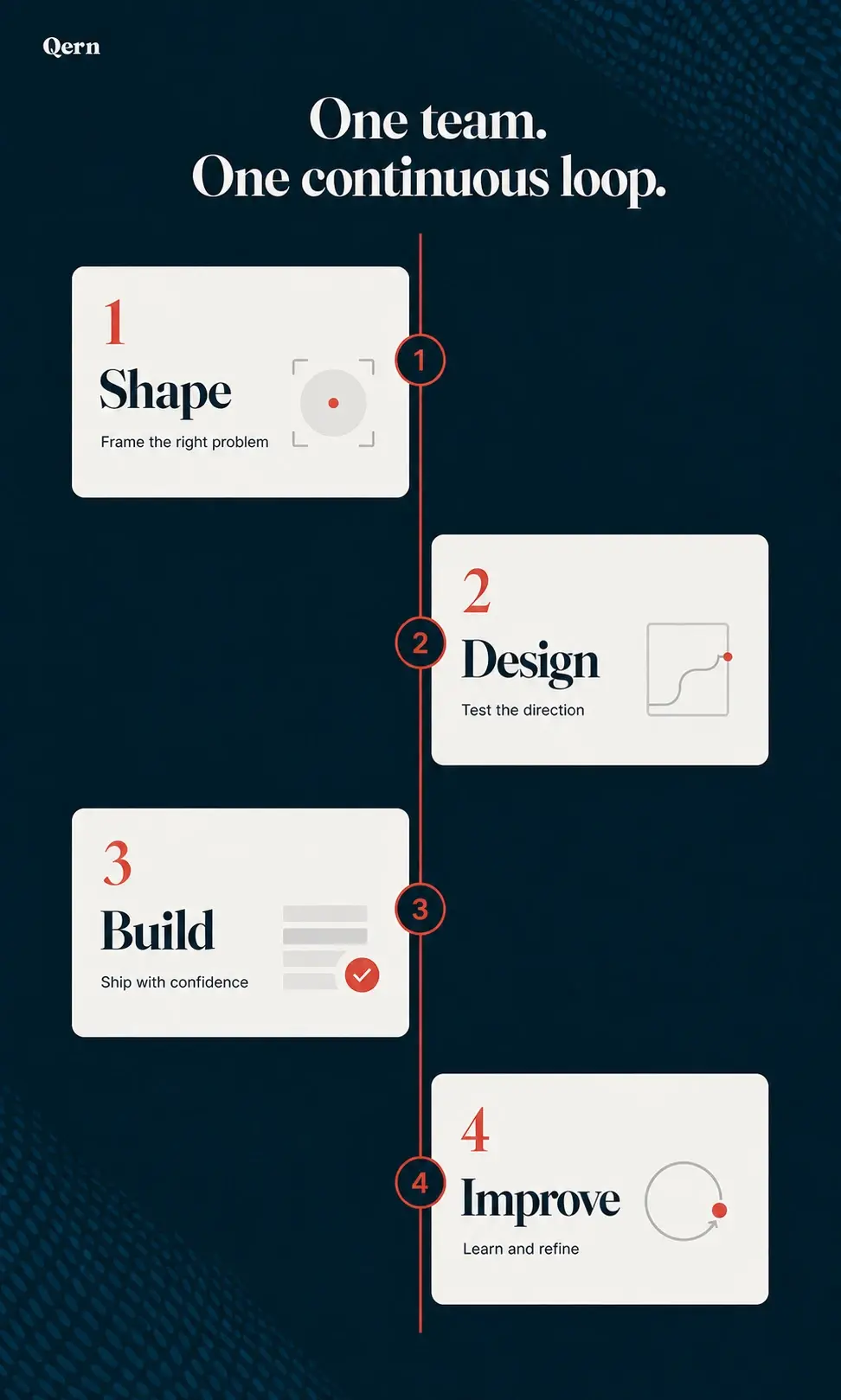
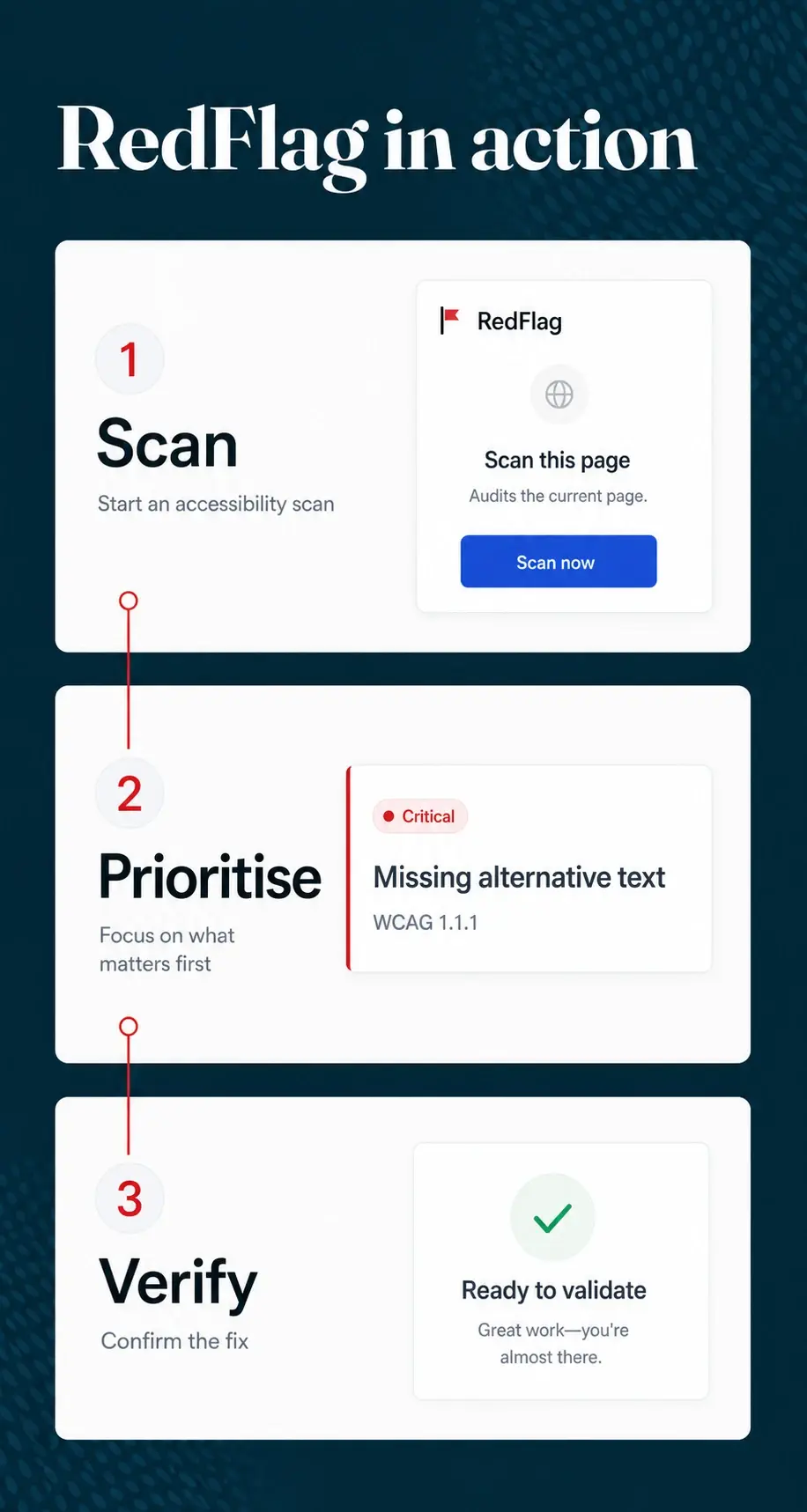
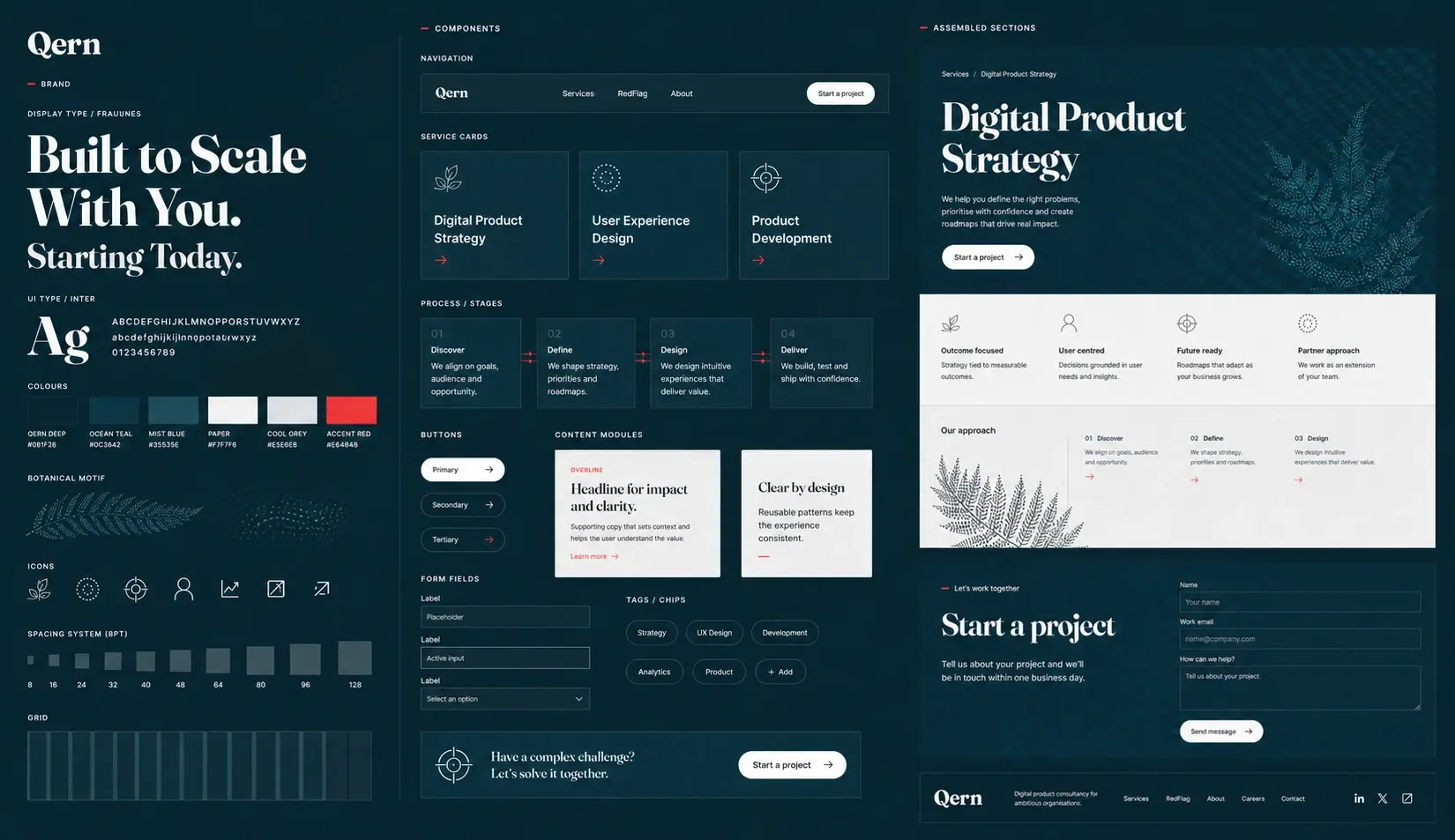
Defined a four-stage engagement model: Shape (find the right problem), Design (make it tangible), Build (ship useful software), Improve (learn from real use); and six service lines running from product strategy and UX design through custom web application and SaaS development to accessibility auditing and WCAG compliance support. Wrote the positioning and site, and built RedFlag as Qern's own product so the accessibility and product practice is tested against real constraints rather than described in the abstract.
Collaboration
Engagements are structured so design and engineering stay close: clients can bring Qern in for a focused piece of work or keep the same people alongside them from the first decision through to release, rather than moving between separate strategy, design and build vendors.
Outcome
Qern is live and trading from Canberra with a defined service model, a published delivery process and a shipped product of its own. Client engagement outcomes and commercial results are not public and are not claimed here.
- 6
- Service lines, from product strategy to WCAG compliance support
- 4 stages
- Shape → Design → Build → Improve engagement model
- Not yet public
- Client and commercial outcomes, see What I learned
What I learned
Seven years leading product design inside banks taught me to work within someone else's constraints. Running Qern means setting them: choosing what not to sell is as much of a design decision as any screen. The honest gap in this case study is evidence: engagement outcomes exist but are not yet published, and I would rather say so than dress up capability as results.
 Nedbank Help Centre